Showing posts with label visualisation. Show all posts

PQ FUI Toys

PQ FUI Toys from Peter Quinn on Vimeo.


Super fun, pre-animated, sometimes looping, customizable Fake User Interface assets, as editable After Effects comps. Just drag and drop to quickly create and customize FUI layouts to suit your projects.

For sale at aescripts.com/pq-fui-toys

Tutorial video at vimeo.com/pquinn/fui-quickstart

Futuristic GUI

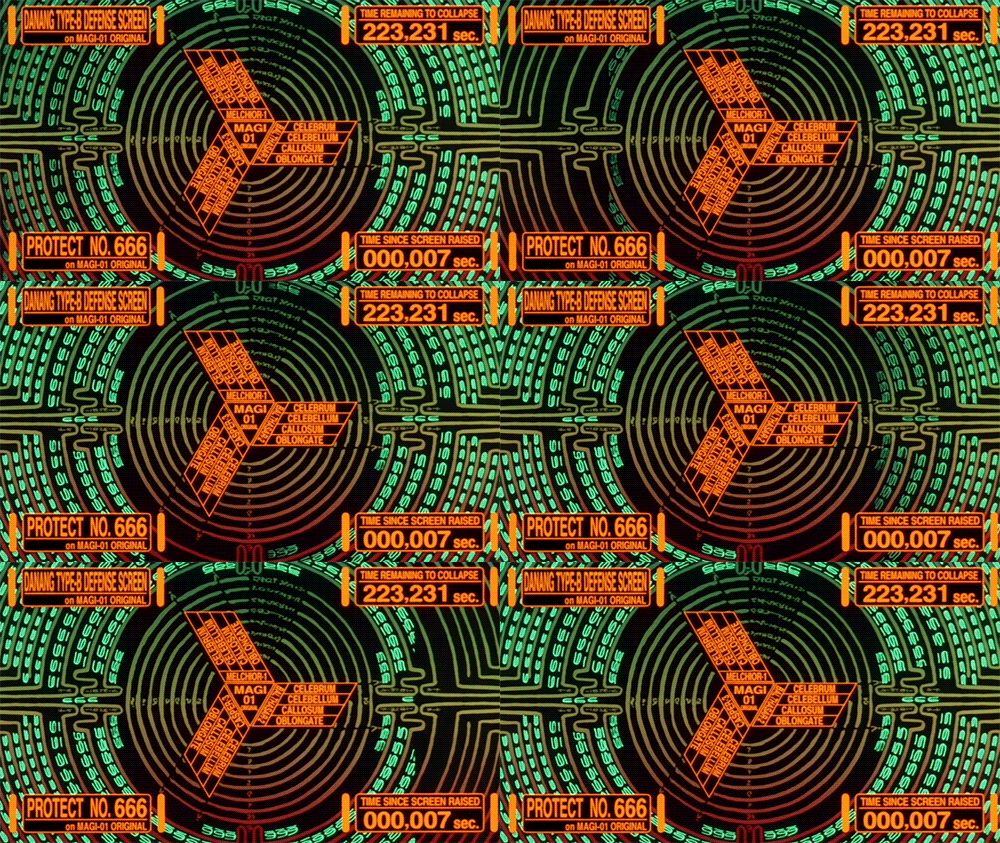
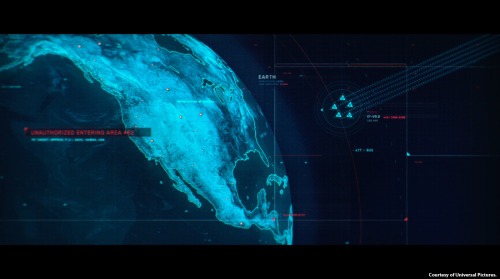
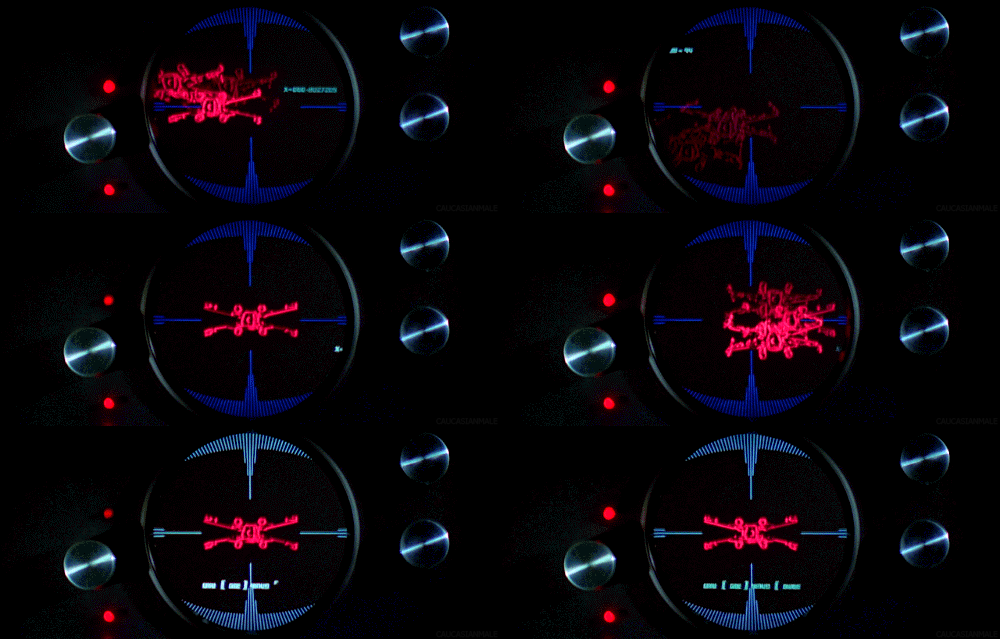
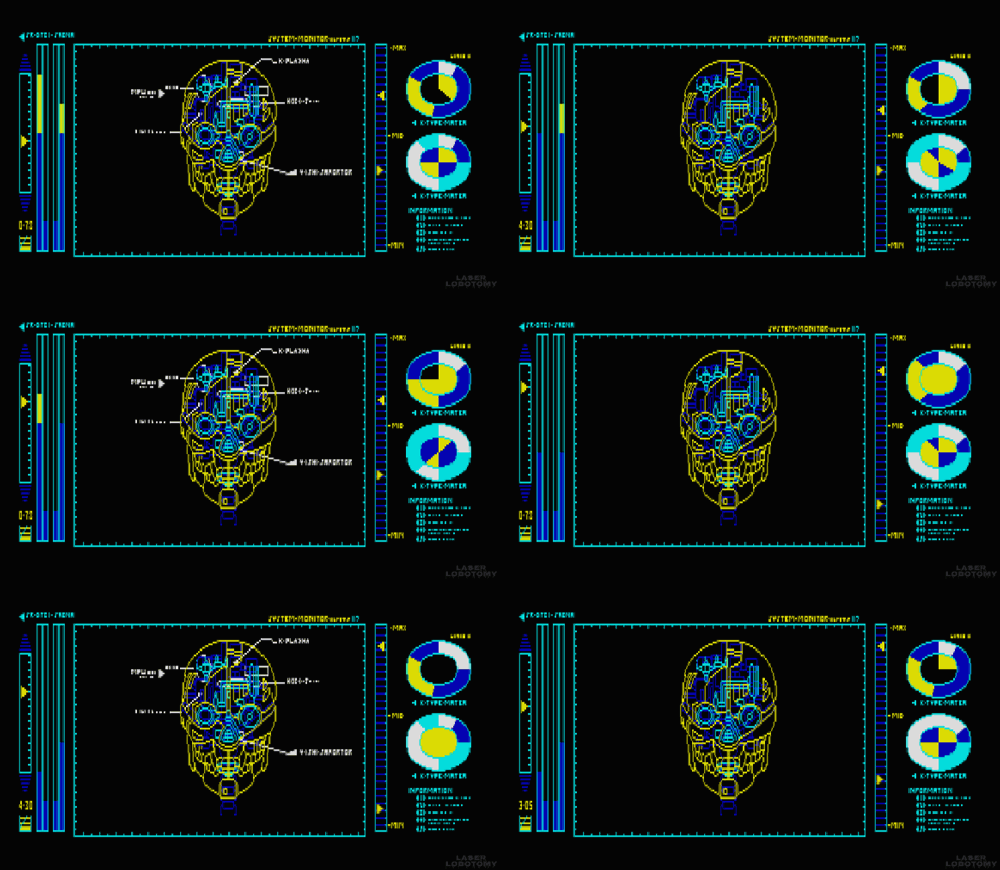
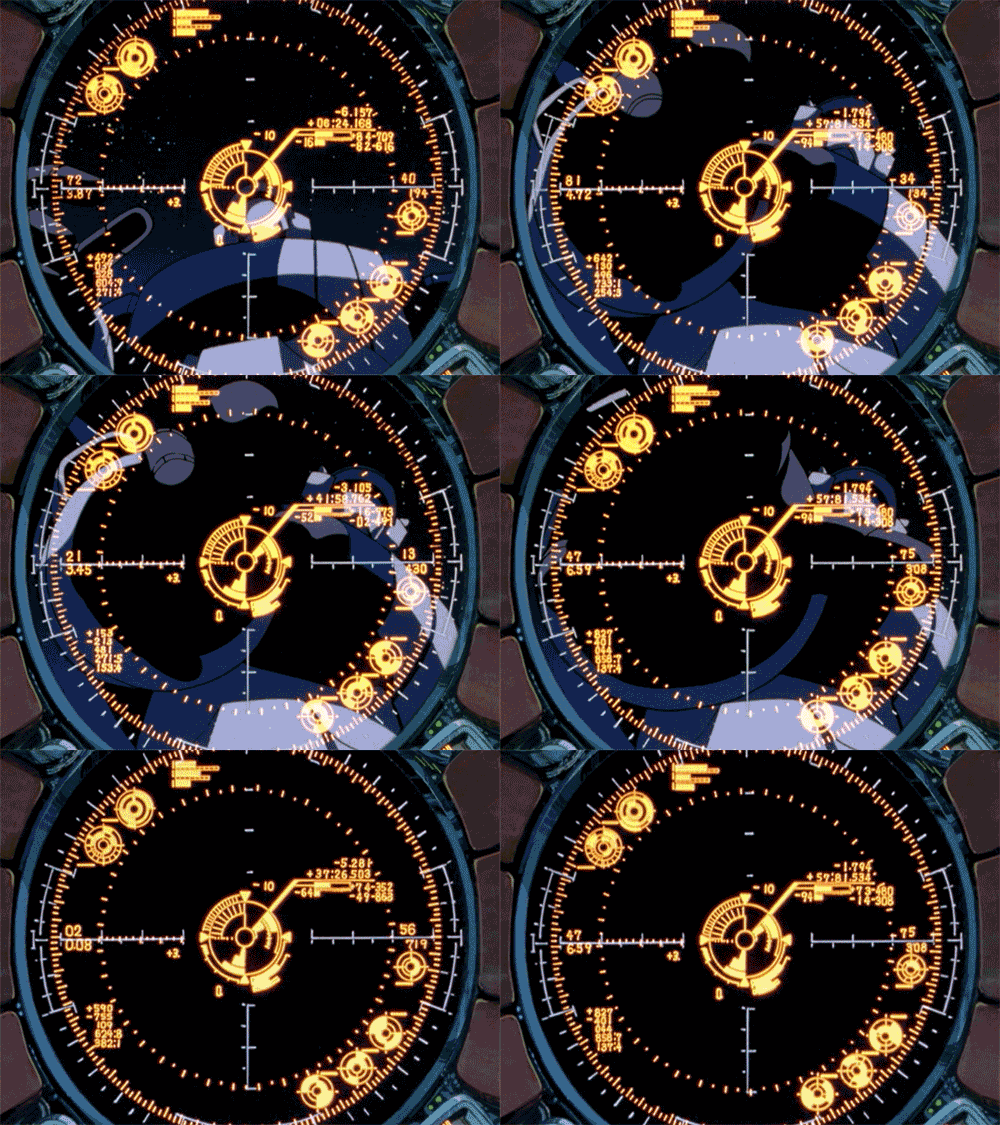
Now, I have to admit I have have something of a penchant for sci-fi movies and always become distracted the plot and often jealous of the cool interfaces the characters in these movies get to use. So you'll understand that I was pretty excited when I stumbled across a tumblr created by a Czech person (I don't know who they are, very mysterious) who shares this interest in futuristic graphical user interfaces and has gone through the trouble of collecting the best examples and turning them into gifs. I've shown my favourites from the collection below:


Check out the whole of this awesome collection over at Visual Punker

Microsoft Viral Search

What does it mean for online content to “go viral”? An analysis of almost a billion information cascades on Twitter news, videos, and photos has produced the first quantitative notion of whether something has indeed gone viral, thereby enabling further research into topic experts, trending topics, and viral-incident metrics.


Read more at Information Aesthetics.

Automated Storytelling

We live in the era of Big Data. Never in modern human history have companies and individuals had more (and more complex and reliable) numbers, statistics, and metrics at their disposal: from box scores to earnings reports to housing prices to placement-test results, we are at sea in an ocean of numbers and awash in spreadsheets. As artificial-intelligence pioneer Kris Hammond explains in this film, the great challenge in the Big Data era is understanding the stories those numbers tell and, just as important, connecting the right people with the right stories.


“This is what Hammond and his company, Narrative Science, do: create fluidly written, micro-targeted news stories from massive amounts of raw data—and do it hundreds of thousands of times, and slightly differently for each reader or listener. The recipient could be a fast-food franchisee seeking to understand what menu item sells best at what moment of the day, at what time of year, even in what weather, so he can optimize point-of-sale strategies. “

“Our entire job,” says Hammond, “is to humanize data. It is to be a communication bridge between the numbers and the knowing.”

Read more on the Future of Storytelling.


London’s Oyster Card Tidal Flow

Excellent map animation from Oliver O’Brien that visualises the touch ins and outs of Oyster cards, London's travel cards. Originally created for the “Sense and the City” exhibition at the London Transport Museum, which ran from Summer 2011 to Spring 2012, this animation powerfully illustrates the flow of London's population towards its centre as people commute in to work.

The in/out numbers are for each 10-minute interval. For stations where the in/out numbers are roughly equal at that time, the colour is white. Red stations indicate a strong flow into the network and green stations show a predominately outward flow. The Oyster card data was supplied by Transport for London and a version of this animation was created and shown at the London Transport Museum during its "Sense and the City" exhibition in 2011/2. The video here is a screen capture of a OpenLayers map which was produced by me at UCL CASA for the exhibition. The background map is based on data from Ordnance Survey Open Data (Crown Copyright) and OpenStreetMap contributors (ODbL). Background imagery created using Mapnik.

Key in a lock

This is excellent. I'd never thought about how a key turns in a lock before now.


Globaia - The Anthropocene

The Anthropocene = "A period marked by a regime change in the activity of industrial societies which began at the turn of the nineteenth century and which has caused global disruptions in the Earth System on a scale unprecedented in human history: climate change, biodiversity loss, pollution of the sea, land and air, resources depredation, land cover denudation, radical transformation of the ecumene, among others. These changes command a major realignment of our consciousness and worldviews, and call for different ways to inhabit the Earth."


This video is an illustration of map experiments that demonstrate the Anthtopocene, and it shows several features of our global civilization: cities, built environment, transmission lines, pipelines, main paved and unpaved roads and railways.


This is essentially really intense mapping, but once you've got your head around the rather weighty text introduction (after the link), the true scale and meaning behind it will blow your mind.

via Globaia

A Facebook Prototype

Australian-based-but-Swedish Interactive Art Director Fred Nerby has created this short but rather interesting video that proposes a new conceptual approach to Facebook's page layout. In terms of look and feel it does borrow quite heavily from the tiled interaction of the Nokia Lumia, and the branding does overlap a little. However, I really like the magnifying glass and overlay panel approach when viewing comments so that the user remains on the main page, and the split screen double scrolling panels is an interesting touch, but is it scalable? Also, the large profile images that look like they were taken on a modelling shoot might not be for everyone (it would be interesting to see what happens if users were encouraged to replace small avatar images with large glossy ones).

What this video really needs though is to placed in a contextual screen so that the viewer can see how this layout scales across platform (from desktop to tablet to mobile). It will be interesting to see if a Facebook spokesperson comments on this video as this new page layout and the sliding panel interaction all looks very similar to the new MySpace which was relaunched in December 2012.

Facebook Prototype - Conceptional Approach from Fred Nerby on Vimeo.

OrgOrgChart – the evolution of a company’s structure over time, visualized.


The OrgOrgChart (Organic Organization Chart) project looks at the evolution of a company's structure over time. A snapshot of the Autodesk organizational hierarchy was taken each day between May 2007 and June 2011, a span of 1498 days.

Each day the entire hierarchy of the company is constructed as a tree with each employee represented by a circle, and a line connecting each employee with his or her manager. Larger circles represent managers with more employees working under them. The tree is then laid out using a force-directed layout algorithm.

From day to day, there are three types of changes that are possible:
- Employees join the company
- Employees leave the company
- Employees change managers


Read more here
How long different animals live, in vintage ISOTYPE infographic. Austrian sociologist, philosopher, and curator Otto Neurath, who was born 130 years ago today, and his wife Marie pioneered the International System Of TYpographic Picture Education in the 1930s, laying the foundation for modern infographics.

via the incredible Brain Pickings


Maps before maps


Awesome collection of medieval maps from the 11th to the 14th centuries. Some of them are geographic, but most of them are more like rough sketches of how the individual saw the area the image represents.

Check out more here.

Rory Sutherland's thoughts and observations

Fantastic animation by Animade which visualises some of Rory Sutherland's (Vice Chairman, OgilvyGroup UK) thoughts and observations. He talks about the ways people's patience is managed when having to wait for a service - it has been found that the inclusion of a timer will greatly reduce a person's frustration if they know exactly how long they have to wait.

Revolutionary User Interfaces


The human computer interface helps to define computing at any one time. As computers have become more mainstream the interfaces have become more intimate. This is the journey of computer technology and how it has come to touch all of our lives.

Now this is really cool; an interactive timeline that describes the milestones in human computer interaction over the years.

Check it out here - http://timeline.verite.co/examples/user-interface/

Google's Project Glass


We believe technology should work for you — to be there when you need it and get out of your way when you don't.

A team within our Google[x] group started Project Glass to build this kind of technology, one that helps you explore and share your world, putting you back in the moment.

Follow along with us at http://g.co/projectglass as we share some of our ideas and stories. We'd love to hear yours, too. What would you like to see from Project Glass?


The prototype version Google has been demonstrating looks like a very polished and well-designed pair of wrap-around glasses with a clear display that sits above the eye. The glasses can stream information to the lenses and allow the wearer to send and receive messages through voice commands. There is also a built-in camera to record video and take pictures.


Love this fan-made video which shows what it could be like playing Battlefield.

Wind map


An invisible, ancient source of energy surrounds us—energy that powered the first explorations of the world, and that may be a key to the future.

This map shows you the wind flowing over the US in real time.

Check it out here http://hint.fm/wind/

Perpetual Ocean


Using a computational model called Estimating the Circulation and Climate of the Ocean, Phase II (ECCO2), the NASA Goddard Space Flight Center Scientific Visualization Studio visualizes surface currents around the world.

Read more here.